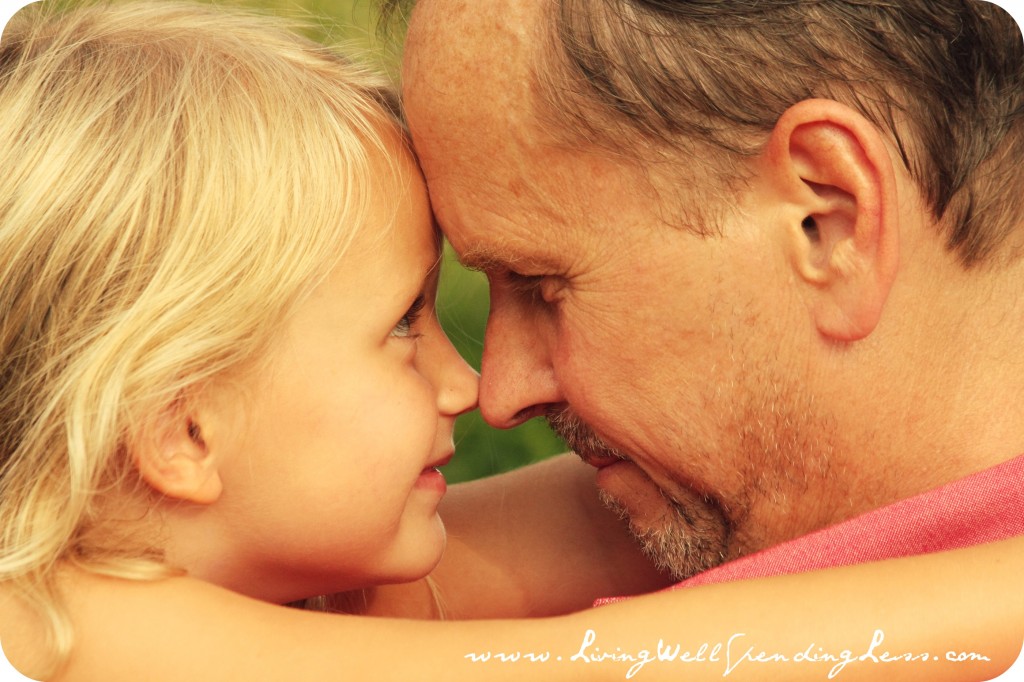
Surely fatherhood matters.
If Nature had intended that parenting be done by just one parent, why did it create two?
And why is the human species so reliant on two devoted parents?
Mostly, modern society seems to act and apparently believe that fatherhood does not matter.
The clearest demonstration of this is that in most family disputes, the father is seen to be dispensable.
The second demonstration is that the excluded fathers' complaints are like screams in space. Unheard.
Do things change when a woman speaks in defence of fatherhood?
Anna Machin is an evolutionary anthropologist, writer and broadcaster whose work argues for the importance of human dads.
Marilyn York is a mother of four children (from two different mothers and three different fathers) and family law specialist whose TED talk makes the case for the importance of fatherhood.
Thank the starry, starry skies for the women defending fatherhood: "Perhaps they'll listen now" (Don McLean).
Showing posts with label fathering. Show all posts
Shared inequalities: at work and at home
By Stephen S Holden
![]() |
| Job-swapping: his for hers |
Emma Watson in her much-discussed UN speech observed that inequalities faced by women are everyone’s problem, and importantly, they are only a part of the problem.
Just as inequalities are overlooked, so too are the solutions. Annabel Crabb recently observed that career women are frequently asked about how they manage their family lives while men never are.
Her solution is deceptively simple: “I don’t think the answer is to stop asking women. The answer is to start asking men.”
Dad: be good to your children, they will love like you do
When Dads get involved in child-rearing, the second beneficiary (after Mum) is the child (or children).
The child gets two loving, hands-on parents.
And curiously, this appears to be a case where not only is two better than one – it works even if, maybe even because, they are different.
The child gets two loving, hands-on parents.
And curiously, this appears to be a case where not only is two better than one – it works even if, maybe even because, they are different.
Research is constantly suggesting that Dad’s role is important - which may be surprising to some.
It probably should not be surprising. If Nature had decided that human children were better raised by one rather than two parents, she probably would have made it that way. That's how Nature - a.k.a. evolution - works.
There are host of odd findings that show the important influence of fathers on the cognitive and emotional development of their children.[i]
It probably should not be surprising. If Nature had decided that human children were better raised by one rather than two parents, she probably would have made it that way. That's how Nature - a.k.a. evolution - works.
There are host of odd findings that show the important influence of fathers on the cognitive and emotional development of their children.[i]
For instance, fathers communicate less on average with their
children than mothers (that figures given that they are male perhaps), but surprisingly,
they appear to have more influence on the vocabulary than the mothers[ii].
However, more generally, the children of engaged fathers
show more significant gains in intellectual development, better self-image,
more sense of humour, longer attention spans, more eagerness for learning, and
greater resistance to peer pressure.[iii]
Daughters in particular, learn really important emotional
and relationship stuff from their Dads, in particular how to relate to the
other sex. As John Mayer says in his song Daughters, “Fathers be good to your daughters / Daughters will love like you do."
As a counterpoint, it is notable that daughters raised with
stepfathers rather than their biological fathers tend to grow up faster[iv].
In particular, they
-
reach puberty earlier
-
menstruate nine months earlier on average
-
commence sexual activity earlier
-
and tend to become pregnant earlier.
Having two parents seems to have a whole lot of positive
effects and reduces a whole set of risks for children. The evidence for this
comes from the risks that are faced by children raised in single-parent
households[v]:
- lower levels of educational achievement
- twice as likely to drop out of school
- more likely to become teen parents
- more conflict with their parent(s)
- less supervised by adults
- more likely to become truants
- more frequently abuse drugs and alcohol
- more high-risk sexual behaviour
- more likely to join a gang
- twice as likely to go to jail
- four times as likely to need help for emotional and behavioral problems
- more likely to commit suicide
- more likely to participate in violent crime
- twice as likely to get divorced in adulthood
- more conflict with their parent(s)
- less supervised by adults
- more likely to become truants
- more frequently abuse drugs and alcohol
- more high-risk sexual behaviour
- more likely to join a gang
- twice as likely to go to jail
- four times as likely to need help for emotional and behavioral problems
- more likely to commit suicide
- more likely to participate in violent crime
- twice as likely to get divorced in adulthood
Caution ought to be applied in interpreting these
conclusions too simplistically.
Firstly, many of the difficulties faced by
children in single-parent households could be related to economic challenges as
single-parent households tend to have less income than two-parent households.
Secondly, children raised in a two-parent household with one parent
displaying serious anti-social behaviour are generally worse off than those
raised in a single-parent household with the the non-deranged parent of course.
However, all in all, Dad’s involvement is clearly of benefit to the
children.
[iii] Ladd,
Linda D. (2000) “Fathers are Important—For Real!” Texas Cooperative Extension, http://eclkc.ohs.acf.hhs.gov/hslc/tta-system/family/Family%20and%20Community%20Partnerships/New%20Parental%20Involvement/Fatherhood/FathersareImpor.htm
[iv]
Bettina Arndt (2002) “Without Dad Little Girls Grow up too Fast” http://www.menstruation.com.au/contributors/withoutdad.html
[v]
Davidson, Tish, “Single parent families” Encyclopedia
of Children’s Health, http://www.healthofchildren.com/S/Single-Parent-Families.html#ixzz2WLeLRxde,
see also http://www.telegraph.co.uk/news/politics/3235650/Children-in-single-parent-families-more-likely-to-suffer-emotional-problems-report-finds.html,
Jackie Morrison (2012) “A case for fatherhood in a single mother society”, http://voices.yahoo.com/a-case-fatherhood-single-mother-society-11820158.html
Dad: the male supermodel
| Dad: a male supermodel |
When we talk of models, many (okay, mostly men) will think
about super-models.
However, Mum and Dad
are both models – and in terms of their degree of influence over their children, it
might even be fair to describe them as ‘super-models’ for their kids.
One of the best predictors of how a child will turn out is
to take a look at the Mum and Dad.
Part of that prediction is based on
genetics, but the other enormous part of that is based on environment.
A child
shares most of their time with their parents, especially in the formative first
five to seven years. After this time, others such as teachers, peers and other
social influences such as media and marketing begin to have some impact.
Take the examples of consumption, and especially sometimes
socially undesirable products such as tobacco and alcohol. People are quick to blame marketing and media, but the biggest
predictor of a child’s consumption of
tobacco and alcohol is that of the parents.
The influence of parents on tobacco and alcohol consumption is higher than peers, and higher
than other influencers such as media and marketing.
Those that take up smoking
are much more likely than those that do not take it up to live in an
environment where smoking is perceived positively and people around them smoke[i].
A child is about two times more likely to take up smoking if one
or other parent smokes, almost three times more likely likely to take up
smoking if both smoke.
Similar findings of the importance of parental and other
family members alcohol consumption and history have been found to predict the
age of uptake of alcohol and the likelihood of alcohol related problems[ii].
In short, parents are important models: "The importance of parents/caregivers as role models can never be over-estimated. They are the child's everything. And the older you get, the more you realise that it's not just your nose or eyebrows that mimic your parents, but also your behaviours."[iii]
Blaming media and marketing influences on children is easy, but more significantly, overlooks the profound influence of parents on their children.
Here’s a few of the particular ways in which Dads serve as models for their sons and their daughters[iv]:
- Dads tend to offer more physical play than mothers,
which increases the physical competency of their young children.
- Fathers often think “out of the box” and offer
alternative strategies for problem solving.
- Fathers teach sex roles: they are generally more
physically active with their sons and more protective of their daughters.
When fathers model behaviours that are respectful
to women, their sons are more likely to see women as human beings rather than
“things” to manipulate. When men do not father at all, well then things get very ugly.
Abusive fathers raise abusive children, and absent fathers raise lost children.
[i] J. Leonardi-Bee, M.L. Jere, J. Britton, (2011) “Exposure to
parental and sibling smoking and the risk of smoking uptake in childhood and
adolescence: a systematic review and meta-analysis.” Thorax, 66(10):847-55.
doi: 10.1136/thx.2010.153379, http://www.ncbi.nlm.nih.gov/pubmed/21325144,
accessed 3may2013
D.B. Buller,
R. Borland, W.G. Woodall, J.R. Hall, P. Burris-Woodall, J.H. Voeks,
(2003) “Understanding factors that affect tobacco uptake” Tobacco Control, Supp
4, IV:16-25, http://www.ncbi.nlm.nih.gov/pubmed/14645936, accessed 3may2013
[ii] L.B. Fisher, I.W. Miles, S.B. Austin, C.A. Camargo, G.A.
Colditz (2007), Predictors of initiation of alcohol use among US adolescents:
findings from a prospective cohort study.” Archives of Pediatric and Adolescent
Medicine;161(10):959-66.
V. Johnson, L.A. Warner, H.R. White, (2007) “Alcohol
initiation experiences and family history of alcoholism as predictors of
problem-drinking trajectories” Journal of Studies on Alcohol and Drugs,68, 1(Jan)
56-65.
[iii]
Andrew Whitehouse (2013) “Swearing at kids in supermarkets,” The Conversation, April 2, https://theconversation.com/swearing-at-kids-in-supermarkets-13166
[iv] Ladd,
Linda D. (2000) “Fathers are Important—For Real!” Texas Cooperative Extension, http://eclkc.ohs.acf.hhs.gov/hslc/tta-system/family/Family%20and%20Community%20Partnerships/New%20Parental%20Involvement/Fatherhood/FathersareImpor.htm
Doing it Daddy’s Way
Just as women can bring their own feminine traits to the workplace – with great success – so men can bring their own masculine style to the domain of child-rearing.
When my son
was very young, just months old, I told his Mum I wanted to have one day alone
with him each week so that we would learn about on another.
She loved
the idea, and why not? Not only did Dad get involved with his own child, but it
gave Mum a day off.
However,
the theory sounded great, the wrinkles revealed themselves more in the
practice. The very first Saturday that was declared to be Dad-son time, she
hovered around in the background. Actually ‘hover’ makes it sound like she was
a humming bird – and at some levels, she was.
But at another level, she was more like a Momma-bear.
I felt
intimidated. The stereotype of intimidation generally runs in the other
direction, but in this instance, I definitely felt like I was being watched,
and judged – and perhaps found wanting. Even though I tend to work at home, and
so I was around much of the time with our young son even if she was the one
primarily pre-occupied with our first-born. Nonetheless, there was a sense that
on this first Dad-son day that this was not my domain.
To add to
that, Momma bear wasn’t far away as she was pottering around the house doing
other things in other rooms. This could at some level be reassuring, but at
another, it threatened to undermine the whole intention of the practice.
Whenever
our young son would squawk or wail or burp or grizzle, she would holler her
advice from somewhere within the house: “He wants a feed,” “He needs to be put
down,” “You need to change his nappy,” etc.
I quickly
saw that this was not what I had wanted and just as importantly, was probably
not going to work. So I suggested to his mother that for Dad-son day, either
Dad and son would leave the house together, or she could leave the house for
the day leaving us to work it out for ourselves.
It was hard
to establish a rapport with my young son with his Mum playing translator and
big boss ma’am. I was fortunate. His mum agreed to this and so I learned heaps
about my son from these regular intensive interactions, and maybe he learned
some from me too!
Yes, the
Mum may have a good deal of expertise in the care of the offspring. However,
just as Mum will probably acknowledge herself, all the advice in the world
(from her own mother, from her mother-in-law, from other helpful mothers) does
not replace the tried and true hands-on method. At some point, the parent – be
it Mum or Dad – has to work it for themselves.
Men – like
women – need to be supported in this. Parenting is a tough job, and as every
child is different, it is impossible to ‘parent by the book’. So it would be
great if the community, that is employers, neighbours, mums, all stepped up to
support Dad for what he is doing. When he gets involved with the kids at home,
he is doing everyone a favour.
Mum in
particular can help. It is true that ‘his’ way may not be ‘her’ way – just as
‘her’ way may not be the way of those faithful family members who tell her how
to do things. However, she can help by trusting that Dad will learn the same
way she did, by trial and error, hands-on practice.
(For more thoughts along the different and important ways in which fathers offer care, see Richard Fletcher's book The Dad Factor and see Bettina Arndt and some of the damage done when Dad is absent)
Divvying up the despair of divorce
Whatever the inequities of marriage, divorce surely must be a great equalizer. After all, divorce affects both the man and the woman, right? There must be equity in that, right?
I want to take a closer look at divorce and in particular, the losses encountered by divorcees. Sure, it's going to be a man-look. A man-look is the one where he fails to see the butter in front of his face when he scans the contents of the fridge. On the other hand, it is a man-look that allows him to find his way to a destination by glancing at a map. A man-look is a different view of the world. Not wrong, just different.
Marriage is entered through a flower-festooned bower and a shower of rose-petals. Blessings arrive in the form of children. Then in approximately half of these otherwise apparently happy unions, everything goes to hell. The symbols of hope accompanying marriage and child-birth disappear as divorce is adorned with doom : 'All hope abandon ye who enter here.'
I want to take a closer look at divorce and in particular, the losses encountered by divorcees. Sure, it's going to be a man-look. A man-look is the one where he fails to see the butter in front of his face when he scans the contents of the fridge. On the other hand, it is a man-look that allows him to find his way to a destination by glancing at a map. A man-look is a different view of the world. Not wrong, just different.Marriage is entered through a flower-festooned bower and a shower of rose-petals. Blessings arrive in the form of children. Then in approximately half of these otherwise apparently happy unions, everything goes to hell. The symbols of hope accompanying marriage and child-birth disappear as divorce is adorned with doom : 'All hope abandon ye who enter here.'
Subscribe to:
Posts (Atom)